Education
Balancing Side Hustles And Studies: A 2026 Guide for the Modern Gen-Z EntrepreneurBy Ethan Jones

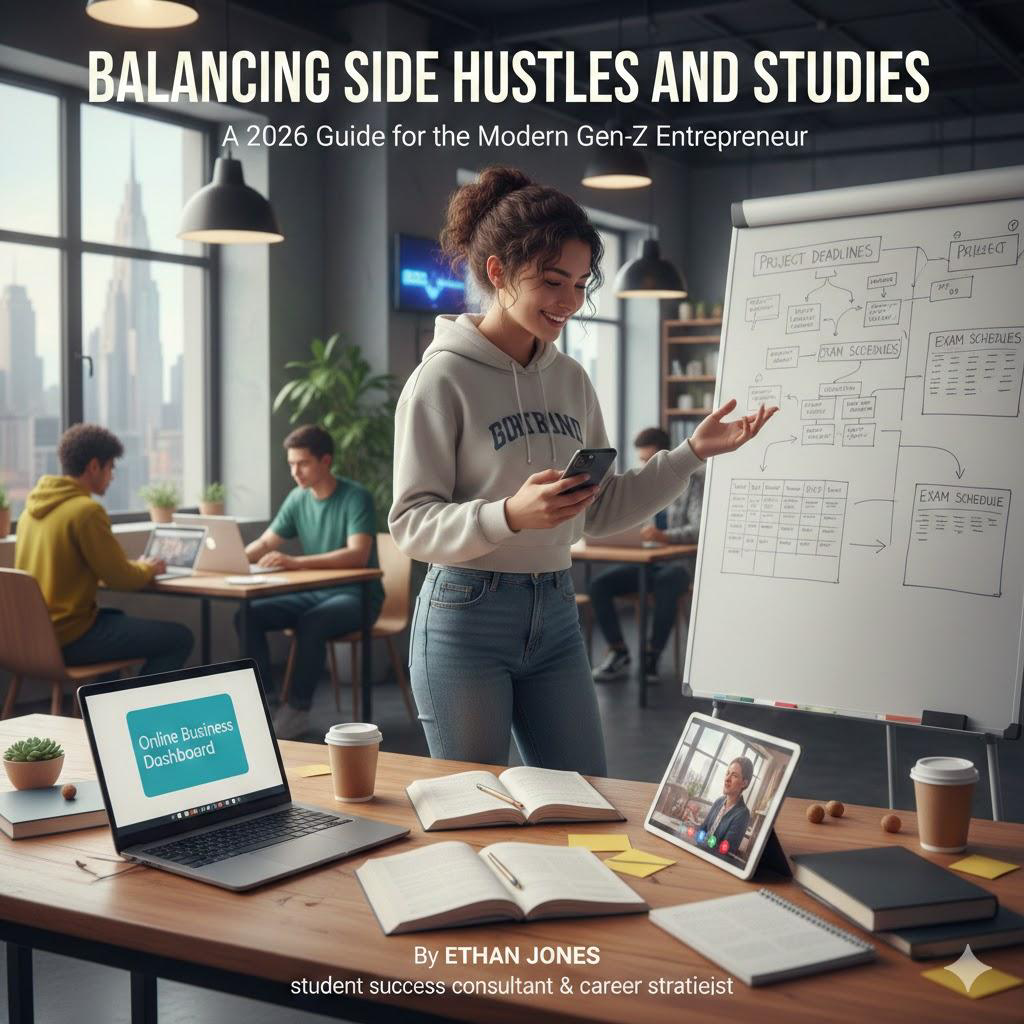
student success consultant & career strategist
The traditional image of a UK student—buried under library books with nothing but a lukewarm coffee for company—is fading fast. For the modern Gen-Z student, the university experience isn’t just about securing a First-Class degree; it’s about building a brand, launching a startup, or scaling a freelance empire.
From Vinted flipping and TikTok Shop dropshipping to freelance AI-prompt engineering, “hustle culture” has hit UK campuses hard. However, while the dream of financial independence is alluring, juggling a demanding academic schedule with a growing business is a high-stakes balancing act.
As someone who has mentored hundreds of students through the UK Enterprise Hub system, I’ve seen firsthand that the difference between a successful “studentpreneur” and a burnout statistic comes down to one thing: clinical precision in lifestyle integration.
The Gen-Z Shift: Why We Hustle
For Gen-Z, a side hustle isn’t always about greed; it’s often about necessity. With the rising cost of living in UK student hubs like London, Manchester, and Bristol, the standard Student Finance England (SFE) maintenance loan rarely covers the basics.
Furthermore, the 2026 graduate job market is hyper-competitive. Modern students realize that a degree is the baseline, but a proven track record of running a business provides the “Experience” that employers crave.
1. Audit Your Time (The Brutal Truth)
Before you can balance your life, you need to see where your time is actually going. Most students fall into the trap of “productive procrastination”—spending hours tweaking a logo for their business instead of writing that 3,000-word essay due on Monday.
- The Strategy: Use the “Time Blocking” method. Instead of a vague to-do list, schedule specific blocks in your calendar for lectures, deep study, and business operations.
- The Pro-Tip: Treat your business hours like a job and your study hours like a sacred commitment. If you find yourself drowning in coursework while trying to meet a business deadline, don’t let your grades slip. Myassignmenthelp.com can help you organize your research and ensure your UCAS or university credits stay on track while you’re closing deals.
2. Leverage the “Academic Advantage”
One of the biggest mistakes Sixth Form and university entrepreneurs make is treating their studies and their business as two separate entities.
- Use Your Resources: Your tuition fees pay for high-speed Wi-Fi, premium databases (like Mintel or Statista), and free software licenses.
- Case Studies: If you are studying Business, Marketing, or Computer Science, use your side hustle as a live case study for your assignments. It makes your research easier and your business smarter. And instead of feeling overwhelmed and thinking, “Should I pay someone to do my assignment ? ”, try integrating your real-world business challenges into your coursework. This approach not only saves time but also turns your academic tasks into practical growth opportunities for your venture.
3. The Power of “Micro-Tasking”
In my experience, the most successful student founders don’t look for 8-hour workdays. They master the gaps:
| Time Slot | 2026 Entrepreneur Task |
| Morning Commute | Respond to customer enquiries or engage on social media. |
| Between Lectures | Schedule content using AI tools or platforms like Buffer. |
| Lunch Break | Review your Shopify/Vinted analytics or update bookkeeping. |
4. Prioritise Health Over “The Grind”
The UK student mental health crisis is real. The “no sleep” mantra is toxic. Research shows that sleep deprivation kills creativity—the very thing you need to succeed in both exams and entrepreneurship. Set a “hard stop” time. No emails after 9 PM. No textbooks after 10 PM.
5. Automate and Delegate
In 2026, you shouldn’t be doing repetitive tasks manually.
- Automate: Use AI agents for basic copywriting and automated email flows for customer service.
- Outsource: If you’re struggling with a heavy week of academic research, look for help. Utilizing academic support services can free up the 10-15 hours a week you need to take your business to the next level without sacrificing your degree classification.
Frequently Asked Questions
Q.1 Can I run a business while receiving a UK Maintenance Loan?
Yes. However, you must declare your business income to HMRC if you earn over the £1,000 tax-free trading allowance. Your student loan is generally not affected by your earnings, but it is always best to check the latest SFE guidelines for your specific household income bracket.
Q.2 How do I choose between a deadline and a business opportunity?
Use the “90/10 Rule.” If the assignment is worth 10% of your grade, don’t sacrifice a £1,000 deal for it. However, if it’s your final dissertation, the long-term value of your degree outweighs a short-term sale. In crunch weeks, leverage support services like MyAssignmentHelp to keep your academic progress steady while you focus on the business.
Q.3 Are there grants available for UK student startups?
Absolutely. Most UK universities have an “Enterprise Hub.” Look for the Santander Universities Entrepreneurship Awards or local “Innovate UK” grants which often provide equity-free funding for students and recent graduates.
Q.4 Is it possible to start a side hustle in Sixth Form (High School)?
Yes, many Gen-Z founders start on Vinted or Depop at 16. The key is using your school’s business studies curriculum to refine your model and ensuring your A-Level or BTEC revision remains the priority during exam season.
About the Author: Ethan Jones
Ethan Jones is a senior contributor at several UK education platforms and a career strategy consultant. With over a decade of experience helping students navigate the intersection of academic excellence and professional ventures, Ethan specializes in time-management frameworks for the modern digital economy.

Complete Guide to Custom Apparel Printing with Heat Transfer Vinyl

312-625-6909: What You Should Know About Unknown Phone Numbers and Spam Calls

Pixelspinx com: A Complete Guide to Understanding the Platform and Its Growing Popularity

973-551-7680: What You Should Know Before You Call Back

Top UK Fashion Trends You Must Follow in 2026
